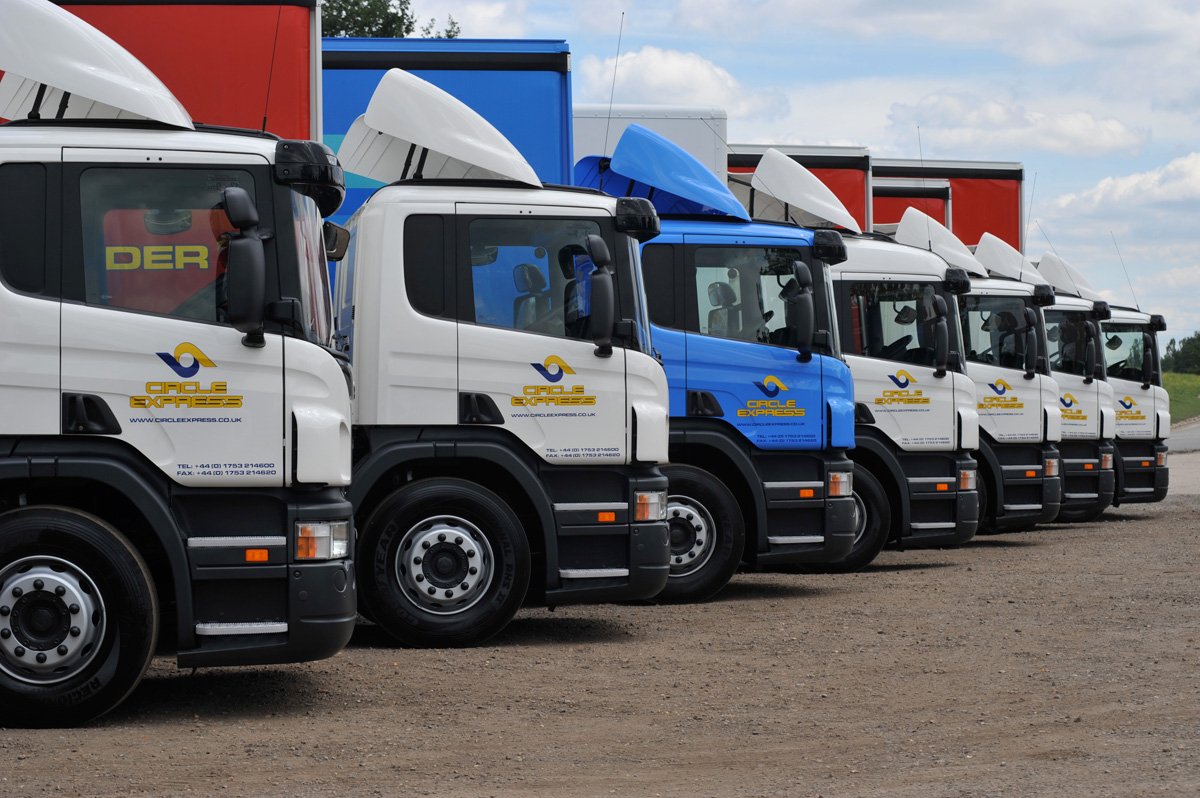
Mobile On Site CPC Training

Circle Express are a working transport company, with hundreds of drivers delivering thousands of packages per day throughout the UK,
including all 9 classes of Dangerous Goods.

We offer mobile CPC Training courses and on-site CPC Training:

  • Our accredited trainers deliver practical, relevant training with passion & fun
  • We can train at various Circle Express depots or at your company site
  • We can offer courses tailored to your drivers’ requirements and dates
VN:F [1.9.17_1161]
Rating: 0.0/10 (0 votes cast)
VN:F [1.9.17_1161]
Rating: 0 (from 0 votes)

Class 1 Explosive ADR Training

adr-training-class-1From grenades and Fireworks Distributors, to missiles and dynamite, Explosives come in a variety of forms. To legally carry them on a commercial basis over certain thresholds, a driver will need an ADR training certificate displaying Class 1. At Circle Express Specialist Services we have been providing Class 1 Explosive training for several years. Our training expertise stems from our years of operational experience in carrying explosives for a variety of customers.

Like the Class 7 Radioactive module, the Class 1 ADR Explosives module is a specialized one-day course which is covered in more detail than the other hazard classes. There are significant and obvious reasons for this due to the very nature of explosives themselves and the levels of damage that can be caused should they be initiated. Our hands-on operational knowledge complements our informative course and above all provides you with the skills to transport explosives safely and securely.

Whether you are an existing ADR-trained driver looking to add Class 1 Explosives to your licence via a one-day course or an un-trained driver starting from scratch with ADR Core and Class 1, we can help you.

We are a DfT-approved independent training provider for all classes of dangerous goods, regularly audited and verified by the SQA (Scottish Qualifications Authority). We also regularly carry explosives and have large contracts for fireworks distribution and radioactive transport.

VN:F [1.9.17_1161]
Rating: 10.0/10 (1 vote cast)
VN:F [1.9.17_1161]
Rating: 0 (from 0 votes)

Class 7 ADR Driver Training

adr training class 7 class 1In addition to the other training modules we offer, Circle Express Specialist Services provides ADR driver training for Class 7 Radioactive. If you are an existing ADR driver looking to increase your potential by adding Class 7, this can be done via a one day module. Or, if you are doing your ADR from scratch but only wish to carry Class 7 Radioactive Material, you can take the ADR training Core module and the Class 7 Module over two and a half days.

As an independent training provider we have been delivering ADR Class 7 training for several years, however, our specialist operational division has been transporting radioactive material since its inception. It is this hands-on operational experience that further enhances our course delivery and ensures it is drawn from actual experience of moving radioactive material.

The Class 7 Radioactive module is a more in-depth specialized one-day module compared to other hazard classes. Here you will learn the basic principles behind radioactivity, but most essentially how to handle and transport radioactive material safely and securely.

We are a DfT-approved independent training provider for all classes of dangerous goods, regularly audited and verified by the SQA (Scottish Qualifications Authority).

VN:F [1.9.17_1161]
Rating: 0.0/10 (0 votes cast)
VN:F [1.9.17_1161]
Rating: 0 (from 0 votes)

CPC Training with Circle Express

cpc-trainingCircle Express are a leading provider of CPC Training.

Professional lorry drivers are legally required to hold a Driver Certificate of Professional Competence (Driver CPC) in addition to their vocational driving license.

Circle Express are a leader in the haulage and transport sector, consequently we can offer courses that are highly practical and relevant for your drivers since our experience is based on the real world rather than the classroom.

Circle Express has a scope, knowledge and experience on training like none of our competitors as we are at heart a transport company. Circle Express has been trading for 30 years and we face the same training issues that you do. Circle Express operates 300 vehicles and employees over 400 drivers so not only do we have training experience but we have an unrivalled experience at managing drivers and their training needs.

Why choose Circle Express for CPC Training?

    • Circle Express are a transport company so we face the same issues as you do
    • Unrivaled experience in managing drivers and their needs combined with real-world experience of CPC Training needs
    • Our accredited trainers deliver practical, relevant training with passion & fun
    • We can train at various Circle Express depots or at your company site via our mobile CPC Training service
    • We can offer courses tailored to your drivers’ requirements and dates


Click here for Training Calendar

VN:F [1.9.17_1161]
Rating: 8.5/10 (2 votes cast)
VN:F [1.9.17_1161]
Rating: 0 (from 0 votes)

Changes to Dangerous Goods Transport Regulations

Dangerous Goods Regulations

Over the next two years a set of new Regulations will come into force affecting the transportation of dangerous goods by road, rail, sea and air. These Regulations, which flow from the United Nations’ (UN) Recommendations on the Safe Transport of Dangerous Goods, will introduce major changes.

Transport of Limited quantities of Dangerous Goods

The 2009 text of the European Agreement Concerning the International Carriage of Dangerous Goods by Road (ADR), along with its rail equivalent the RID (Regulations Concerning the International Carriage of Dangerous Goods by Rail), will be fully implemented in the UK on 1 July 2009 by the Carriage of Dangerous Goods and Use of Transportable Pressure Equipment Regulations 2009. These Regulations implement the RID/ADR changes, except where the UK has negotiated derogations.

Both ADR and RID are mandatory for international carriage between European countries and govern the carriage of dangerous goods by road and rail in Europe. The EU Framework Directive on Inland Transport of Dangerous Goods means that these Regulations are also mandatory in EU Member States for domestic transport.

Among changes affecting both road and rail are new provisions for the transport of goods packed as limited quantities (LQs). LQs refer to small dangerous goods combination packages: aerosol cans in a fibreboard box, as delivered to a retail outlet, for example. These can enjoy relaxations from the full application of the rules because the risk is lower due to the smaller amount of product per package.

From January 2011, there will be changes to the carriage of dangerous goods packed in LQs, including new placarding requirements for transport units over 12 tonnes tare (unladen) weight that are carrying LQ goods in excess of eight tonnes.

Vehicles, wagons and containers conveying LQ packages will have to be marked with “LTD QTY”, or in accordance with the International Maritime Dangerous Goods (IMDG) Code if a sea leg is part of the journey. Failure to comply could result in prosecution of the operator. But this requirement only applies if eight tonnes of these LQs are carried on a transport unit with an unladen weight above 12 tonnes (and only if it’s not already carrying orange plates for full regulated dangerous goods). Consignors will be required to inform carriers of the total gross mass in advance, but a formal dangerous goods transport document won’t be required.

Transport of Dangerous Goods in Tunnels

Another related change is that excepted quantities (EQ) – which are even smaller than LQ goods, for example sample products – are now permitted in road and rail transport.

This is the implementation of a change from the UN, and is based on traditional air regulatory practice. The sizes of package are similar to those allowed in air transport (inners max 30g/ml, outers max 1kg/l). Non-UN tested packaging is allowed if it’s marked with a red hatched EQ mark: if a transport document is carried then the fact that the dangerous good in EQ is being carried and the number of packages must be entered on the document. There will be a maximum limit of 1000 packages per transport unit.

Tunnel codes reflecting the new tunnel restrictions in RID/ADR will now need to be entered on transport documents unless the route is known not to include any restricted tunnels.  

A very important change that applies just to ADR concerns instructions in writing, otherwise known as the TREMCARD or transport emergency card. Before ADR 2009, these instructions were supplied by the consignor and had to be made available in the main languages of the countries through which the vehicle would pass.

As well as clarification of these instructions and confirmation that they are for the driver and not emergency responders, this four-page document must be kept readily available in the cab, and provided by the carrier instead of the consignor. Rather than reflect the main languages of origin, transit and destination, they must now be written in the languages best understood by the vehicle crew, which must be done before the journey begins.

From 31 December 2009, Amendment 34 to the (IMDG) Code – which affects all sea transport of dangerous goods, both international and domestic (including deep sea, European ro-ro and domestic ferries) – brings some quite important changes.

Marine pollutants will be classified for the first time, the upshot being that there will be no distinction made between “marine pollutant” and “severe marine pollutant”. All marine pollutants must now be indicated by a letter “P” in the dangerous goods list, or self-classified by the consignor in accordance with 2.9.3 of the Code.

VN:F [1.9.17_1161]
Rating: 0.0/10 (0 votes cast)
VN:F [1.9.17_1161]
Rating: 0 (from 0 votes)

Dangerous Goods Transport Overview


Dangerous Goods Tranport


Any goods or products that pose a risk to people, property and the environment are classified as dangerous goods and are assigned to different classes ranging from 1 to 9. These types of goods can range from those which are highly dangerous (such as explosives, flammables and fuming acids) to everyday products such as paints, solvents and pesticides found in the home and at work. Transport of these dangerous goods via airline courier is regulated and these goods need to be packaged correctly as laid out in the various international and national regulations for each mode of transport to ensure that they are carried safely to minimise the risk of an incident.

VN:F [1.9.17_1161]
Rating: 0.0/10 (0 votes cast)
VN:F [1.9.17_1161]
Rating: 0 (from 0 votes)

Launch of Circle Express Specialist Services (Dangerous Goods Transport)

Transport of Dangerous Goods

Air freight transporter Circle Express has launched a new business dedicated to the transport of specialist goods such as radioactive materials and explosives. Called Circle Express Specialist Services the new subsidiary is also approved to transport firearms (Section 5).

MD Tom Ryan tells MT the new division has been created in response to customer demand. “We’ve noticed that other carriers are backing away from transporting specialist cargo owing to the training and costs required for it,” he says. “However more and more products are being classified as dangerous goods, so this is definitely a good market for us.”

 Driver CPC, ADR and Dangerous Goods Awareness Training

The new company is also the umbrella business for Circle Express’s training programmes, including Driver CPC, ADR and Dangerous Goods Transport Awareness Training.

Circle Express fleet director Nick Hedderly will manage the division. He says: “Changes in regulations are ongoing and the ADR is updated every two years, so companies hauling specialist goods need to be on the ball. The course we’ve been approved to deliver is mobile, so we can also take it to third parties if required. Since we deal with dangerous goods transport on a daily basis we bring our operational expertise into the training to make it practical for the drivers.”

Circle Express Investment

Elsewhere in the firm turnover has returned to above pre-recession levels says Ryan. “Our target is to reach £50m turnover in the next few years [currently it is around £25m]. We couldn’t have foreseen the economic downturn, so it will take us a little longer than originally planned. However, the recession prompted us to be smarter and leaner, and business has really picked up.”

As a result the company has invested in a 4000ft2 depot in Aberdeen, which went live on 14 June. Three HGVs and three vans are dedicated to the site.

VN:F [1.9.17_1161]
Rating: 0.0/10 (0 votes cast)
VN:F [1.9.17_1161]
Rating: 0 (from 0 votes)

Carriage and Transport of Dangerous Goods

Transport of Dangerous Goods

Any goods that pose a risk to people, property and the environment are classified as dangerous goods and are assigned to different classes ranging from 1 to 9. These types of goods can range from those which are highly dangerous  to everyday products such as paints, solvents and pesticides found in the home and at work. When transported these goods need to be packaged correctly as laid out in the various international and national regulations for each mode of transport to ensure that they are carried safely to minimise the risk of an incident.

Carriage of Dangerous Goods

If you are involved in the Carriage of Dangerous goods by road, you need to comply with the relevant requirements laid down in the European Agreement Concerning the International Carriage of Dangerous goods by Road (known as ADR training) for the specific substance you want to transport.

For more information please contact our experienced team on:-

Dangerous Goods Transport
t: 01753 214605
e: dgtransport@circleexpress.co.uk


VN:F [1.9.17_1161]
Rating: 0.0/10 (0 votes cast)
VN:F [1.9.17_1161]
Rating: 0 (from 0 votes)

Welcome to Dangerous Goods Transport.com from Circle Express

Circle Express

Specialist Services

Welcome to DangerousGoodsTransport.com from Circle Express Specialist Services, a division of Circle Express.

We our a leading carrier of dangerous and hazardous goods and a training provider offering both ADR training courses and CPC Training courses.

Please contact our experienced team to discuss your requirements in more detail using the email addresses below or the contact form on this page.

Dangerous Goods Transport
t: 01753 214605
e: dgtransport@circleexpress.co.uk

Dangerous Goods Training
t: 01753 214638
e: dgtraining@circleexpress.co.uk

VN:F [1.9.17_1161]
Rating: 0.0/10 (0 votes cast)
VN:F [1.9.17_1161]
Rating: 0 (from 0 votes)
SEO London | Web Design London | Blog Design | WordPress Consulting | Pay Per Click Consulting by Titanium Consulting